
In modern poultry farming, achieving faster broiler growth is directly linked to one major factor: high-quality protein in poultry feed. Protein is essential for muscle development, immune strength, feather growth, and overall weight gain. For broiler farmers, feed accounts for nearly 65–75% of total production costs, which makes choosing the right protein sources extremely important for profitability.
This article explores the best protein sources in poultry feed that support faster broiler growth, better feed conversion ratio (FCR), and improved meat yield.
Protein is made up of amino acids, which are the building blocks of muscle tissue. Broilers grow rapidly, especially during the first 6 weeks, and their protein requirements are high during this phase.
Faster muscle development
Improved weight gain
Better feed efficiency (FCR improvement)
Stronger immunity
Reduced mortality
Higher breast meat yield
However, not all protein sources deliver the same results. The quality of protein depends on:
Amino acid profile
Digestibility
Anti-nutritional factors
Cost per unit protein
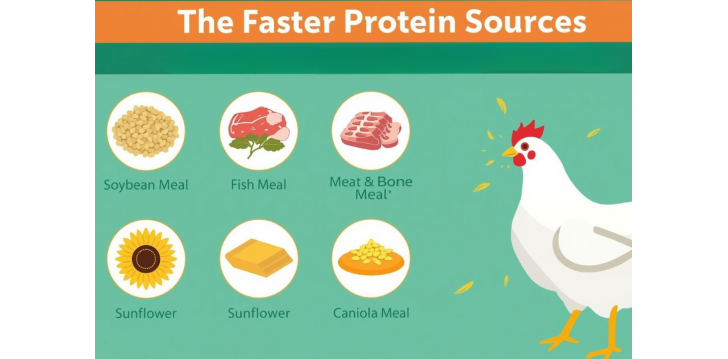
Soybean meal is the most widely used protein source in broiler feed due to its balanced amino acid profile and high digestibility.
Protein content: 44–48%
Key nutrients: Lysine, arginine, energy-rich amino acids
Excellent amino acid balance
Highly digestible protein
Consistent availability
Supports rapid muscle gain
Price fluctuations
May contain anti-nutritional factors if not properly processed
Best for: Starter and grower broiler feed.
Fish meal is a premium protein ingredient and one of the best natural sources of essential amino acids.
Protein content: 55–65%
Key nutrients: Methionine, lysine, omega-3 fatty acids
Improves broiler growth rate significantly
Enhances immunity and gut health
Boosts feed intake and appetite
Expensive compared to plant proteins
Quality varies depending on supplier
Overuse can cause odor in meat
Best for: Boosting early-stage growth and improving FCR.
Meat and bone meal is a cost-effective protein option derived from animal by-products.
Protein content: 45–55%
Key nutrients: Calcium, phosphorus, amino acids
Rich in minerals for bone development
Economical compared to fish meal
Improves weight gain when used correctly
Risk of contamination if sourced from low-quality producers
Digestibility depends on processing
Best for: Grower and finisher stage.
Groundnut cake is a commonly used plant protein source in many regions due to local availability.
Protein content: 40–50%
Key nutrients: Good energy + protein balance
Affordable alternative to soybean meal
Supports moderate growth rates
Risk of aflatoxin contamination
Lower lysine compared to SBM
Best for: Cost-focused broiler feed formulations.
Sunflower meal is a plant-based protein source that can partially replace soybean meal.
Protein content: 28–40%
Key nutrients: Fiber + moderate amino acid profile
More affordable than soybean meal
Works well in balanced formulations
High fiber content reduces digestibility
Needs supplementation of lysine
Best for: Grower feed with amino acid supplementation.
Here are some common feeding mistakes that reduce broiler growth performance:
❌ Using low-quality protein meals with poor digestibility
❌ Not balancing amino acids (lysine & methionine deficiency)
❌ Overuse of high-fiber meals like sunflower meal
❌ Using contaminated ingredients (aflatoxin in groundnut cake)
❌ Ignoring feed formulation ratios and energy-protein balance
Most poultry nutritionists recommend a blend of plant and animal proteins for best results.
A strong combination includes:
Soybean meal (base)
Fish meal or MBM (boost)
Corn gluten meal (protein enhancer)
Fermented meal or insect meal (premium digestion support)
This ensures:
Choosing the right protein sources in poultry feed is one of the most important decisions for faster broiler growth. While soybean meal remains the most reliable ingredient, combining it with fish meal, meat and bone meal, corn gluten meal, or sustainable alternatives like insect protein can significantly improve performance.
For maximum broiler growth and profitability, farmers should focus not only on crude protein percentage but also on amino acid balance, digestibility, and ingredient quality.
_100x70.png "The Future of Poultry Protein: Clean Labels, Sustainability & Nutrition")



_100x70.jpeg "Future of Poultry Protein in Functional Foods and Supplements")
_100x70.jpeg "Low-Fat, High-Protein: Why Poultry is a Superfood for Weight Management")



Web Design Company - Graphinet



